welcome to pinyi leather

Custom PU Notebooks for Your Brand | OEM & ODM
Learn how to customize PU notebooks with different covers, logos, page layouts and finishing options for your brand, retail business or promotional project.custom PU notebooks
9/15/20263 min read


A notebook can be more than a simple writing tool. For brands, retailers, corporate suppliers, and promotional product distributors, a well-designed notebook can become a practical product that keeps a brand visible in everyday use.
PU notebooks are especially suitable for customization because their covers can be produced in different colors, textures, sizes, and finishing styles. With the right combination of materials and details, businesses can create notebooks that match their brand identity while keeping production costs under control.
1. Start With the Right Notebook Format
Before choosing the cover material or logo finish, it is important to determine how the notebook will be used.
Common formats include A4, A5, and smaller pocket sizes. An A5 PU notebook is popular for everyday meetings, business notes, and personal planning, while larger formats can provide more writing space for professional applications.
The number and type of inner pages can also be adjusted according to the target market. Options may include:
Lined pages
Blank pages
Grid pages
Planner-style layouts
Customized printed pages
Different paper weights and finishes
Choosing the format first makes it easier to control the overall size, weight, and production cost.
2. Choose a PU Cover That Fits Your Brand
The cover is one of the first things customers notice.
PU leather can provide a leather-like appearance while offering a practical solution for businesses looking for a more controlled production cost. Different surface textures can create completely different visual effects, from smooth and clean finishes to more pronounced leather grain patterns.
Color is another important part of customization. Black, brown, dark blue, and other classic colors work well for professional notebooks, while brighter or customized colors can help a product stand out in retail collections.
For brands with specific requirements, material samples can be checked before bulk production to confirm the texture, thickness, and color.
3. Make Your Logo Part of the Cover Design
Logo customization is one of the easiest ways to turn a standard notebook into a branded product.
Depending on the cover material and design, several finishing methods can be considered:
Debossed Logo
A debossed logo is pressed into the PU surface, creating a subtle and professional appearance. It is particularly suitable for minimalist corporate notebooks.
Embossed Logo
An embossed logo creates a raised effect on the cover. It can add more visual depth while maintaining a premium look.
Foil Stamping
Foil stamping can add metallic or colored details to a logo. Gold, silver, and other foil effects can work well for promotional products, corporate gifts, and premium collections.
UV Printing
UV printing provides more flexibility when a logo contains multiple colors or more detailed graphics.
The best finishing method depends on the PU material, logo design, quantity, and desired appearance.
4. Consider More Than Just the Cover
A successful custom notebook is not only about the outside cover.
Additional details can also be customized to create a more complete product, such as:
Ribbon bookmarks
Elastic closures
Pen loops
Inner pockets
Endpapers
Customized page printing
Matching packaging
Custom sizes
For example, an elastic closure can make a notebook easier to carry, while an inner pocket can provide space for business cards, receipts, or loose documents.
These small details can make a standard notebook more useful for a specific customer group.
5. Balance Customization With Production Cost
For B2B buyers, customization needs to be balanced with order quantity and target pricing.
Adding too many different materials, colors, printing processes, or structural changes can increase setup costs and production complexity. A simpler design with carefully selected details may provide a better balance between appearance and cost.
This is particularly important when developing a new notebook for an online store or retail collection.
A practical approach is to first confirm the main specifications, then decide which customization features are essential and which can be added later.
6. Request a Pre-Production Sample
A sample is useful before placing a larger production order.
Photos can show the general appearance, but they cannot always show the actual texture, thickness, color, or feel of a notebook cover.
A physical sample allows buyers to check:
PU texture and color
Cover thickness
Logo finishing
Paper quality
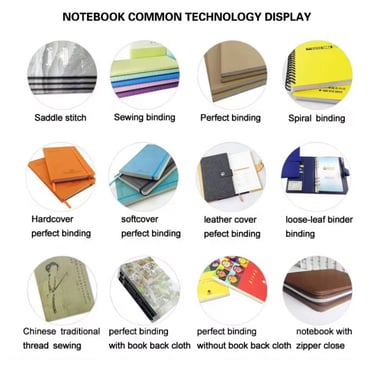
Binding
Elastic or ribbon details
Overall size and weight
If adjustments are required, they can be made before bulk production begins.
7. Choose a Manufacturer With OEM & ODM Experience
For businesses developing their own notebook collection, working with an experienced OEM/ODM manufacturer can make the process more efficient.
Instead of choosing only from existing products, buyers can discuss different cover materials, sizes, logo treatments, page layouts, and accessories to create a notebook based on their target market.
This can be useful for stationery brands, promotional product companies, distributors, online sellers, and businesses looking for customized corporate gifts.
Create a PU Notebook That Represents Your Brand
A good custom PU notebook combines practical usability with a clear visual identity. The right cover material, logo finishing, inner pages, and additional details can turn a basic notebook into a product designed specifically for your customers.
Whether you need a small trial order or a larger OEM project, defining your requirements early and checking a pre-production sample can help reduce unnecessary changes during mass production.
Looking for custom PU notebooks for your brand? Contact us to discuss your design, materials, logo, and production requirements.


Address:
No. 76, Xinfeng Lane, Xinnan Village,Qishi Town, Dongguan City,Guangdong Province, China
Contact:
Newsletter:
Emali: zhang@pinyileather.com
phone number: +8613423453627
© 2024. All rights reserved.
WhatsApp: +8613686057557
Wechat:Z1429643430